

Seven Decades of Innovation: Could Farnborough 2026 Be a Record Year for Aerospace?
As the aerospace industry prepares to gather at Farnborough International Airshow 2026 this July, there is a growing sense that this could be one of the most significant editions in the event’s long and distinguished history.
For ASG Aerospace, the excitement is certainly building.
We’ll be exhibiting on Stand 1320 within the Midlands Aerospace Alliance Pavilion, joining aerospace leaders, supply chain partners and innovators from around the world to discuss the technologies, capabilities and partnerships shaping the future of flight.
Yet while Farnborough is firmly focused on the future, it is also impossible to ignore its remarkable heritage.
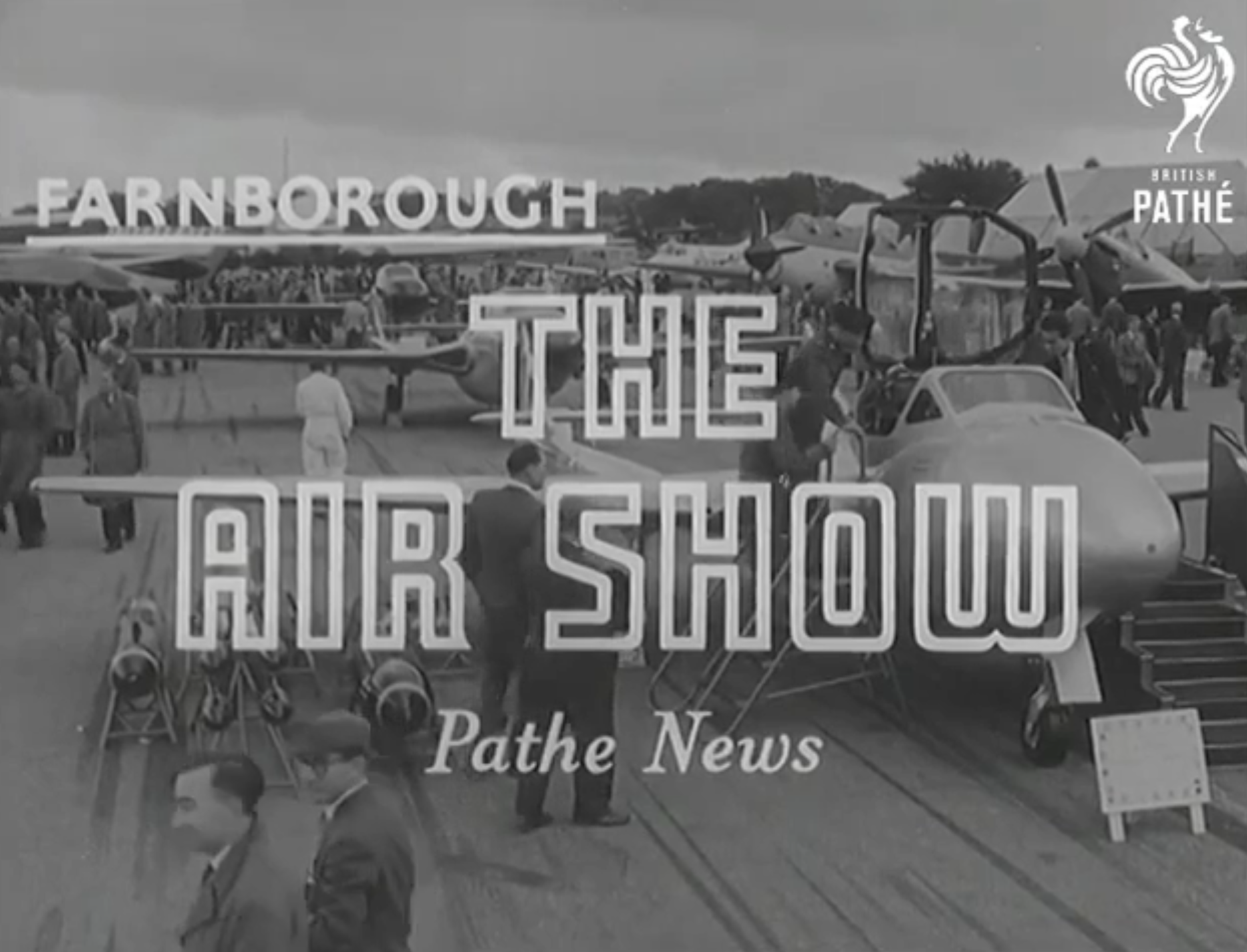
This year marks 70 years since the 1956 Farnborough Airshow, an era when Britain’s aerospace industry stood at the forefront of global aviation innovation. That year’s star was the Fairey FD2, which had just set the first 1,000mph world air speed record. Visitors witnessed an extraordinary display of aircraft that today read like a roll call of aviation history, including the de Havilland Dove, Avro Shackleton, Folland Gnat, Bristol Britannia, Vickers Valiant, Vickers Viscount, Gloster Javelin, Fairey Gannet, English Electric Canberra, de Havilland Vampire, Hawker Hunter and many more.
The footage and photographs from that period capture a sense of ambition and technological optimism that remains at the heart of Farnborough today.
Since moving permanently to Farnborough in 1948, the airshow has become one of the world’s most influential aerospace events, providing a global platform for breakthrough technologies, landmark aircraft programmes and the partnerships that drive the industry forward.
The story of Farnborough extends even further back. Farnborough Airport lays claim to the nation’s first powered flight, when Samuel Cody took to the skies in 1908. The site later became home to the Royal Aircraft Factory, subsequently renamed the Royal Aircraft Establishment, where generations of engineers, scientists and researchers advanced almost every aspect of air and space vehicle design. From Sir Frank Whittle’s jet engine programme to the development of Concorde, Farnborough played a central role in the first century of powered flight.
As we look towards Farnborough 2026, commercial aerospace continues to recover strongly, defence investment is increasing across Europe and North America, and new technologies are transforming the way aircraft are designed, manufactured and maintained.
At ASG Aerospace, we are proud to contribute to that future through our group-wide manufacturing capabilities. With seven facilities across the UK and Germany, our businesses support major civil and defence aerospace programmes through precision machining, complex components, complex assemblies and aerospace surface treatments.
Working with some of the world’s leading aerospace OEMs and Tier One suppliers, we understand the importance of quality, reliability and innovation in a rapidly evolving market.
That’s why Farnborough remains such an important event. It is where ideas become partnerships, partnerships become programmes and programmes help define the future of aerospace.
Could 2026 be a record year for the industry? The signs are certainly encouraging.
We look forward to finding out.