
How ASG Aerospace builds resilience for the aerospace supply chain
For customers building safety-critical technologies such as aircraft systems, the question is simple: can the capability be delivered, every time, without interruption? A big factor considered is the reliability of the supply chain behind it.
Across its UK sites, ASG Aerospace has deliberately created mirrored manufacturing capability. Machines with the same specifications, programming architecture and machining envelope installed in different facilities. If one site experiences disruption, production can move. Customers keep receiving parts. Programmes stay on track.
A great example of this is the physical twinning of long bed machining capacity.
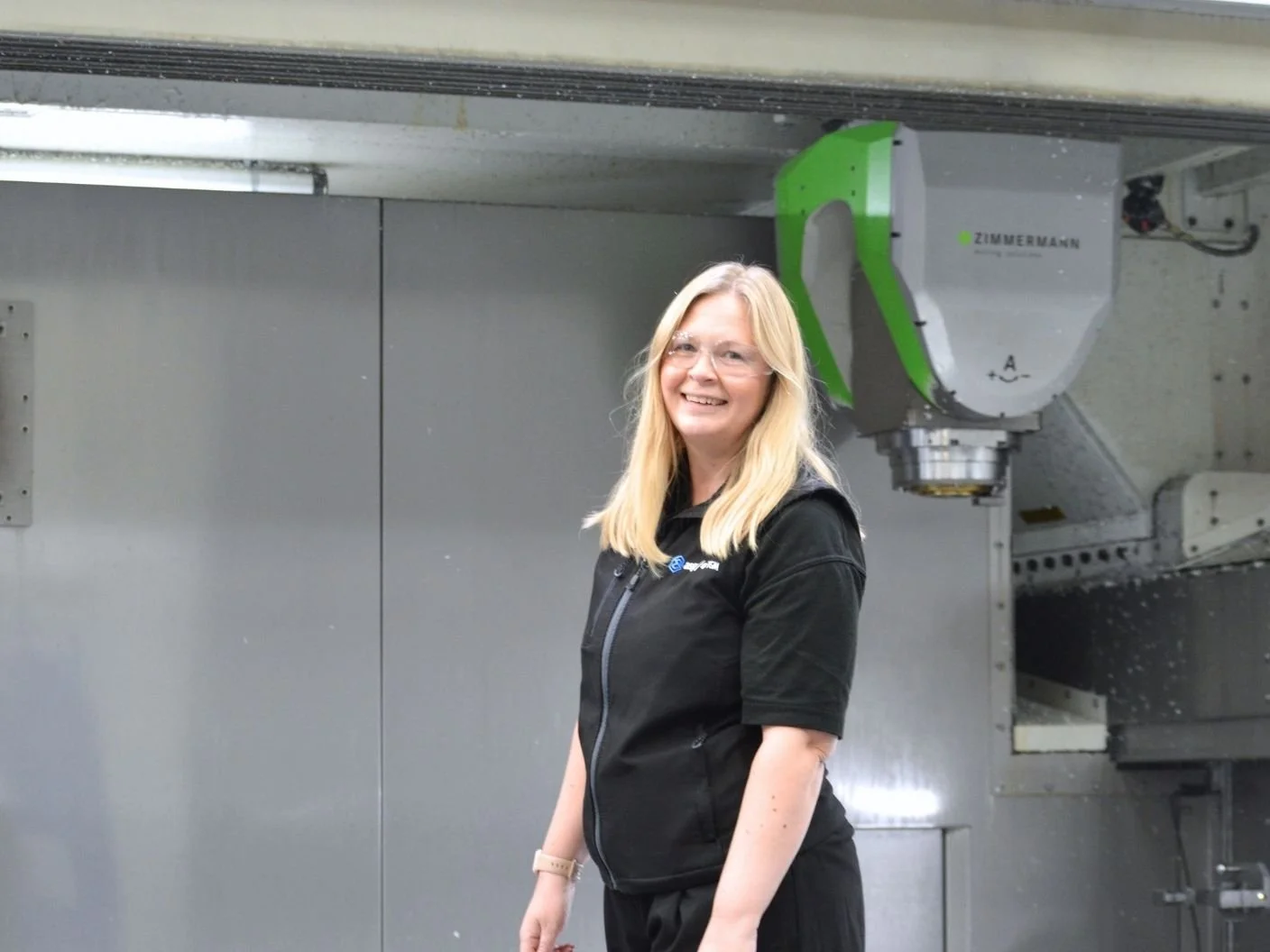
At ASG TGM in Preston, the business invested £1.3 million in a large-bed Zimmermann 5-axis CNC machining centre. The machine dramatically expanded the company’s ability to produce large, complex aerospace structures in a single setup. Long-bed machining capability is rare in the UK supply chain. It also solves a critical aerospace problem.
Large structural components — frames, housings and assemblies — require exceptional stability and accuracy over long machining lengths. Multi-axis machines capable of handling those dimensions are expensive, technically demanding, and difficult to replicate.
For aerospace primes, that capability can become an order-winning criterion. The Zimmermann installation positioned ASG TGM to compete for complex structural machining work that many suppliers simply cannot accommodate.
Twinning capability across the ASG network
ASG Aerospace did not stop at a single machine. A complementary long-bed Zimmermann capability now exists across the group, with a second machine installed at ASG Phoenix in Nottingham. Two machines, two locations — with overlapping machining capability.
Programmes can be balanced between sites. Capacity can scale. If disruption occurs at one facility, it's most likely the other can absorb work. The result is resilience engineered directly into the manufacturing footprint.
For customers managing global aerospace programmes — where delays cascade quickly through complex supply chains — that redundancy matters.
Engineering resilience into the supply chain
The concept of physical twinning reflects a broader philosophy across ASG Aerospace.
Rather than concentrating specialist capability in a single factory, the group has increasingly structured its network so that critical processes can be replicated across multiple sites.
That approach strengthens programme security for customers and provides internal flexibility to balance workloads, protect delivery schedules and scale capacity when demand increases.
In aerospace — where certification requirements are high and supplier qualification can take years — redundancy of capability becomes strategic.
As aerospace programmes grow in complexity and scale, customers are looking beyond individual suppliers toward resilient manufacturing ecosystems. Physical twinning offers a practical answer.
For ASG Aerospace, the Zimmermann installations in Preston and Nottingham represent more than equipment investments. They illustrate how engineering capability, network thinking and long-term customer partnerships can combine to build something the aerospace sector values above all else. Reliability.