

Key Takeaways from the Manufacturing Resilience Forum
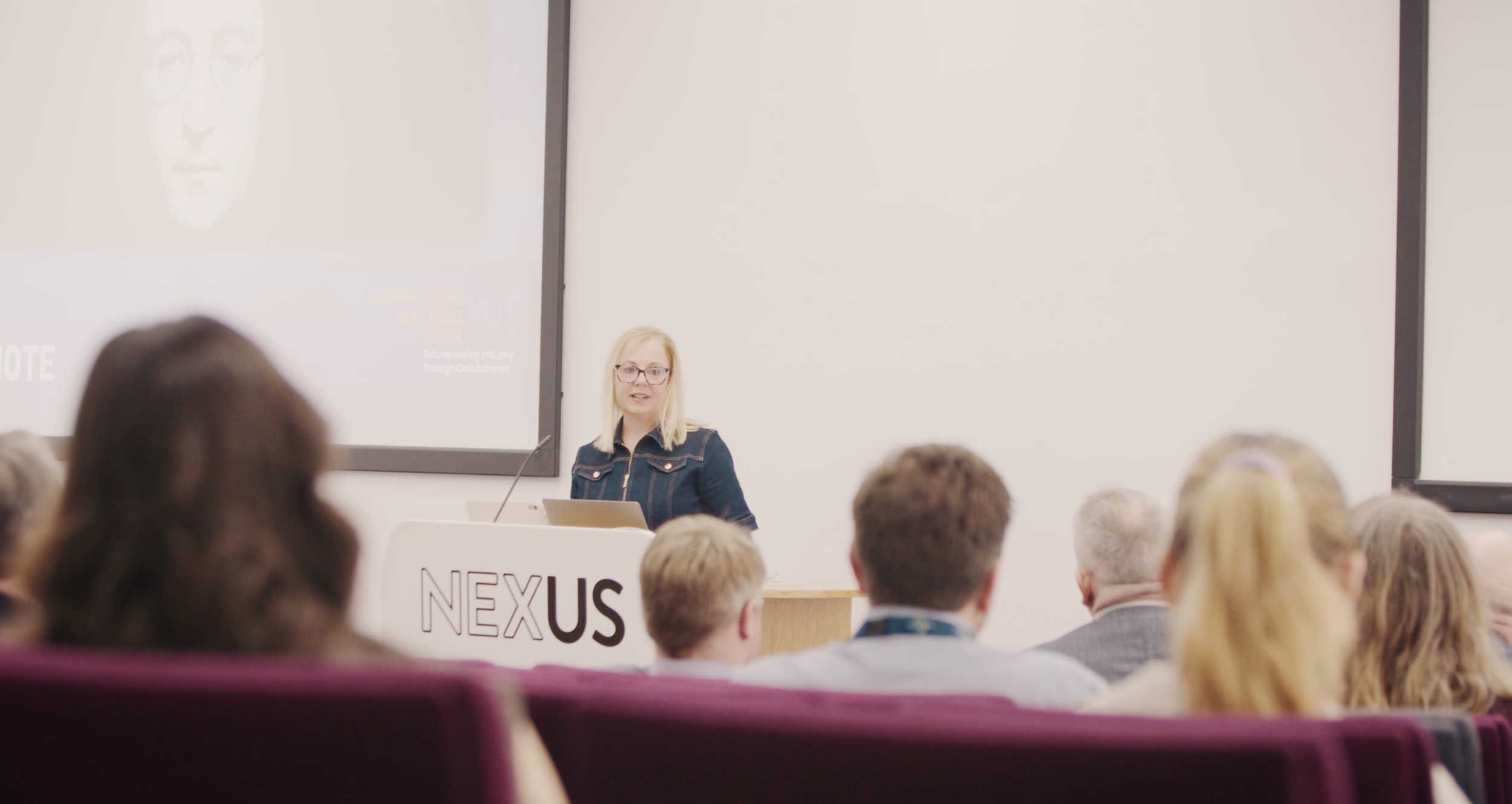
At a time when UK manufacturing is navigating renewed uncertainty, Mandy Ridyard, Director at ASG Aerospace, joined industry leaders at the Manufacturing Resilience Forum to share her keynote perspective on what manufacturing resilience looks like in practice.
Hosted at Nexus at the University of Leeds, the event brought together senior figures from across the sector for a day of discussion including agility, supply chain strategy, workforce development and the role of technology in future-proofing operations. With manufacturing contributing £217 billion to the UK economy and supporting 2.6 million jobs, the stakes for getting this right remain high.
Ridyard’s contribution focused on grounding the concept of resilience in operational reality.
“Resilience has to be designed into your business. How you manage cost pressures, investment decisions, agile capability and talent pipelines are all critical”
Her comments align closely with findings from the NatWest UK Manufacturing Outlook 2026, which highlights a shift across the sector toward embedding flexibility into core operations. As global trade complexity, energy volatility and policy pressures continue to shape decision-making, manufacturers are increasingly prioritising risk management and future agility over short-term optimisation.
For Ridyard, financial discipline plays a central role in that transition.
“There’s a tendency to think of resilience purely in operational terms, but financial resilience underpins everything,” she explained. “If you can create stability in your cost base while designing long-term resilience, you give the business the space to adapt when conditions change.”
She pointed to energy security as one example where this thinking is becoming more prominent, particularly in energy-intensive sectors such as aerospace manufacturing.
“We’re seeing more businesses take control where they can. Whether that’s through on-site generation or smarter energy management, it’s about reducing exposure and improving predictability.”
The forum also explored how digital transformation and artificial intelligence are moving from experimental phases into everyday use. While acknowledging the potential, Ridyard emphasised the importance of measured implementation.
“Technology is a powerful enabler, value comes when it strengthens decision-making, improves visibility and supports consistent delivery.”
Workforce resilience was another key theme throughout the day, reflecting ongoing skills shortages and increasing demand for adaptability within manufacturing teams.
“You can invest in systems and infrastructure, but people are essential to business resilience,” Ridyard noted. “Creating an environment where talent pipelines are supported, developed and engaged is fundamental to long-term performance.”
The discussions reinforced a broader shift taking place across UK manufacturing. As highlighted in the NatWest outlook, resilience is no longer defined solely by financial strength, but by a company’s ability to respond dynamically to changing conditions including supply chains, operations, technology and talent.
For Ridyard, that shift represents both a challenge and an opportunity.
“The businesses that will succeed are the ones that can balance stability with agility,” she said. “It’s about being prepared, making informed decisions, and building a structure that can evolve, not only react.”
As manufacturers continue to navigate a complex global landscape, the message from Leeds was clear: resilience is not a single initiative, but a continuity that increasingly shapes the competitive edge of the sector.