

Yorkshire and the origins of flight: from Cayley to modern aerospace manufacturing
Long before aerospace became a regulated global industry of advanced materials, precision engineering and digital manufacturing, key foundations were laid in Yorkshire — where the science of flight first became engineering reality.
The county that helped make flight possible
Yorkshire’s role in aviation began with Sir George Cayley, widely regarded as the Father of Flight. Born in 1773, Cayley was both an inventor and Member of Parliament for Scarborough — an unusual combination of technical ambition and public responsibility.
In 1809, Cayley published the first clear explanation of the fundamental forces of flight, defining lift, drag, thrust and weight. More importantly, he separated propulsion from lift — a decisive conceptual step that still underpins aircraft design.
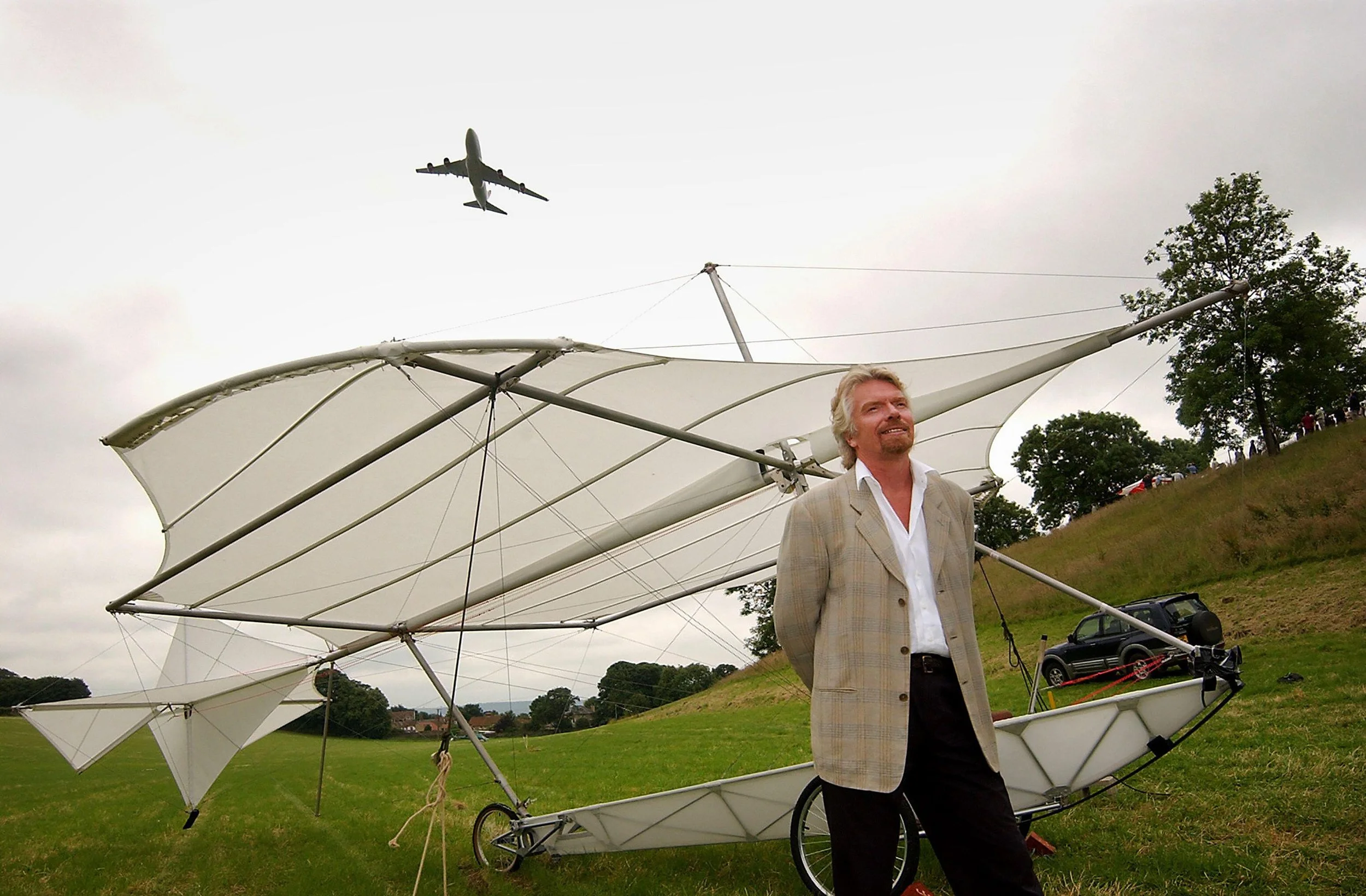
That theory became reality in 1853 at Brompton Dale near Scarborough, when Cayley launched a full-sized man-carrying glider built from wood and canvas. The passenger was his coachman, John Appleby. The glider flew across the valley, marking the first recorded flight of a heavier-than-air, fixed-wing aircraft carrying a human.
Appleby’s reported response on landing — “Please, Sir George, I wish to give notice. I was hired to drive, not to fly!” — captures the risk of early experimentation. But the significance is clear: decades before powered aviation, controlled, heavier-than-air flight had been demonstrated in Yorkshire.
Recognised by the Wright brothers
Cayley’s contribution was later acknowledged by the Wright brothers themselves. In 1909, Wilbur Wright said: “About 100 years ago an Englishman, Sir George Cayley, carried the science of flying to a point which it had never reached before and which it scarcely reached again during the last century.”
From experimentation to industrial aerospace
Cayley’s work was not a one-off. In the early 20th century, Yorkshire helped shape aviation’s industrial phase. The county’s flat coastal sands became natural runways for early pioneers, including including Robert and Tryphena “Jessy” Blackburn, who later founded the Blackburn Aircraft Company.,who later founded the Blackburn Aircraft Company.
Blackburn designs went on to support naval aviation and military aircraft development, embedding Yorkshire engineering into Britain’s defence capability. During the First World War, aircraft based in Yorkshire patrolled the coastline, applying emerging aeronautical science to operational requirements.
That progression — from experimentation to industrial manufacturing — is reflected today at the Yorkshire Air Museum. Replicas of Cayley’s glider sit alongside later aircraft including the Blackburn Buccaneer, illustrating how aeronautics evolved from proof-of-concept flights into large-scale aerospace production.
Globally, the anniversary of powered controlled flight is recognised each year on 17 December, commemorating the Wright brothers’ achievements in 1903. Their success relied on refinement and control — building on earlier principles of lift and stability that Cayley helped define.
A tradition that still shapes aerospace today
Modern aerospace still depends on those fundamentals: aerodynamics, materials science, precision machining and rigorous validation. What has changed is the scale, complexity and regulatory burden — and the requirement for supply chain partners who can deliver repeatable quality alongside technical capability.
For ASG Aerospace, Yorkshire’s aviation history reflects a mindset that still matters: engineering discipline, precision and a drive to solve hard problems. With advanced machining, surface treatment and assembly capabilities across multiple UK sites, the group supports aerospace programmes where reliability and traceability are non-negotiable.
Simon Weston, Group CEO of ASG Aerospace, sees a direct link between early engineering experimentation and today’s manufacturing demands.
“Cayley didn’t just have an idea — he proved it,” he says. “That same mindset still matters in aerospace: understand the fundamentals, engineer it properly, and deliver it consistently. It’s a tradition Yorkshire is known for, and it’s part of what we build on across ASG.”
From a glider launched in Yorkshire to globally integrated aerospace supply chains, the story of flight has always been cumulative: progress built on prior breakthroughs.
As aerospace enters a new era shaped by sustainability, electrification and advanced manufacturing, ASG Aerospace continues to invest in the capabilities and talent customers need. Rooted in the regions that helped make flight possible, the group is focused on ensuring Yorkshire engineering remains relevant to aviation’s next chapter — just as it was at the start.